Guide
Types of Damage in Old Photographs
This page describes the kinds of physical deterioration I work with. It is meant to be useful even if you have not decided to request restoration. If your photograph shows more than one of these problems, that is typical.
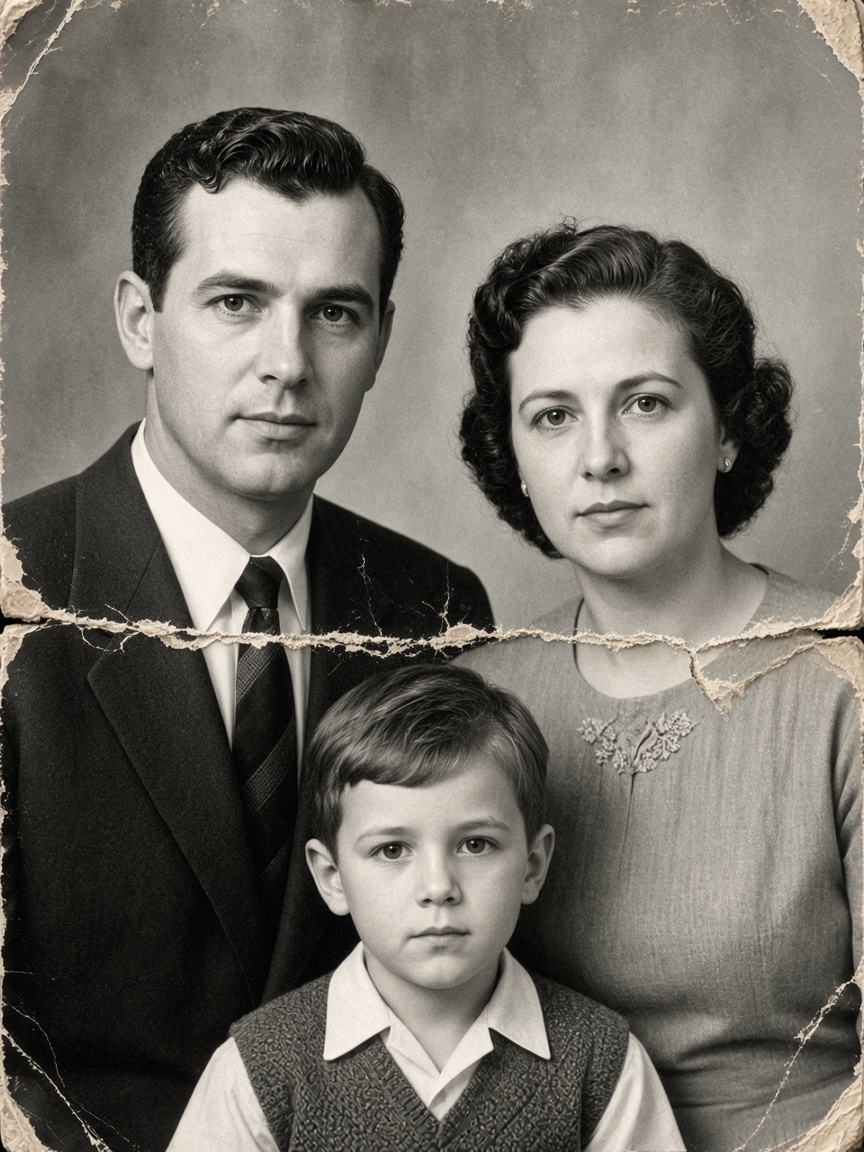
Torn Photographs
Torn photographs often show a clean or jagged separation through the paper, sometimes with a pale line, a slight misalignment, or small losses along the break. The tear may run through a face, a dress, a background, or the margin.
Restoration usually involves aligning the separated parts of the image and repairing the visible break. Where the two sides still meet and neighboring detail is intact, the tear line can often be closed carefully. If the tear has removed a strip of the image, that strip can only be reconstructed if the surrounding photograph provides a reliable guide.
A portrait torn through the middle is a common request. The question is not whether the paper can be taped. It is whether the scan still contains enough of both sides to put the image back together without inventing the missing join.
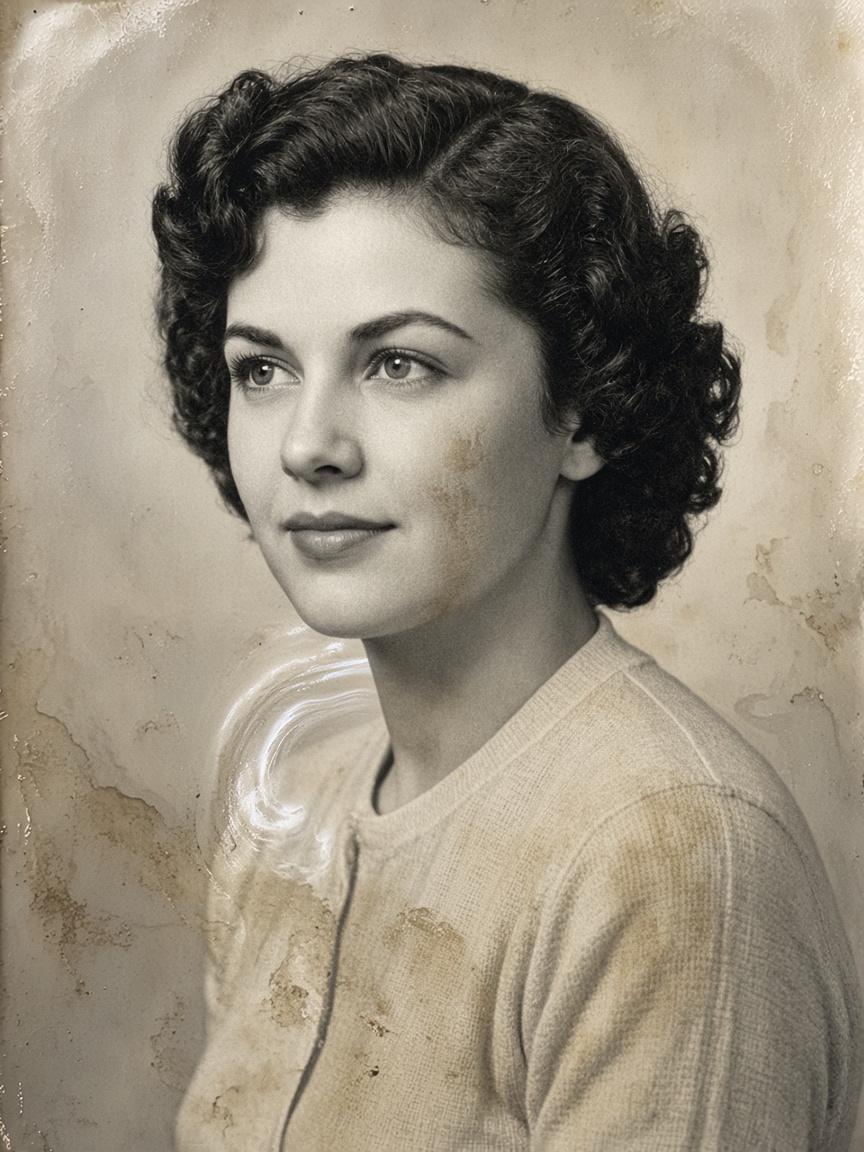
Water Damage
Water damage takes several forms: tide marks, darkened or bleached patches, irregular staining, cockling that photographs as uneven tone, and color shifts where dyes have migrated. Some moisture effects sit on the surface. Others have changed the photographic image itself.
Restoration may reduce stains and even out disrupted areas. It cannot always return a print to the evenness it had before it got wet. If the image in a stained area is still readable, there is more to work with. If the emulsion has washed away, that area may be a loss rather than a stain.
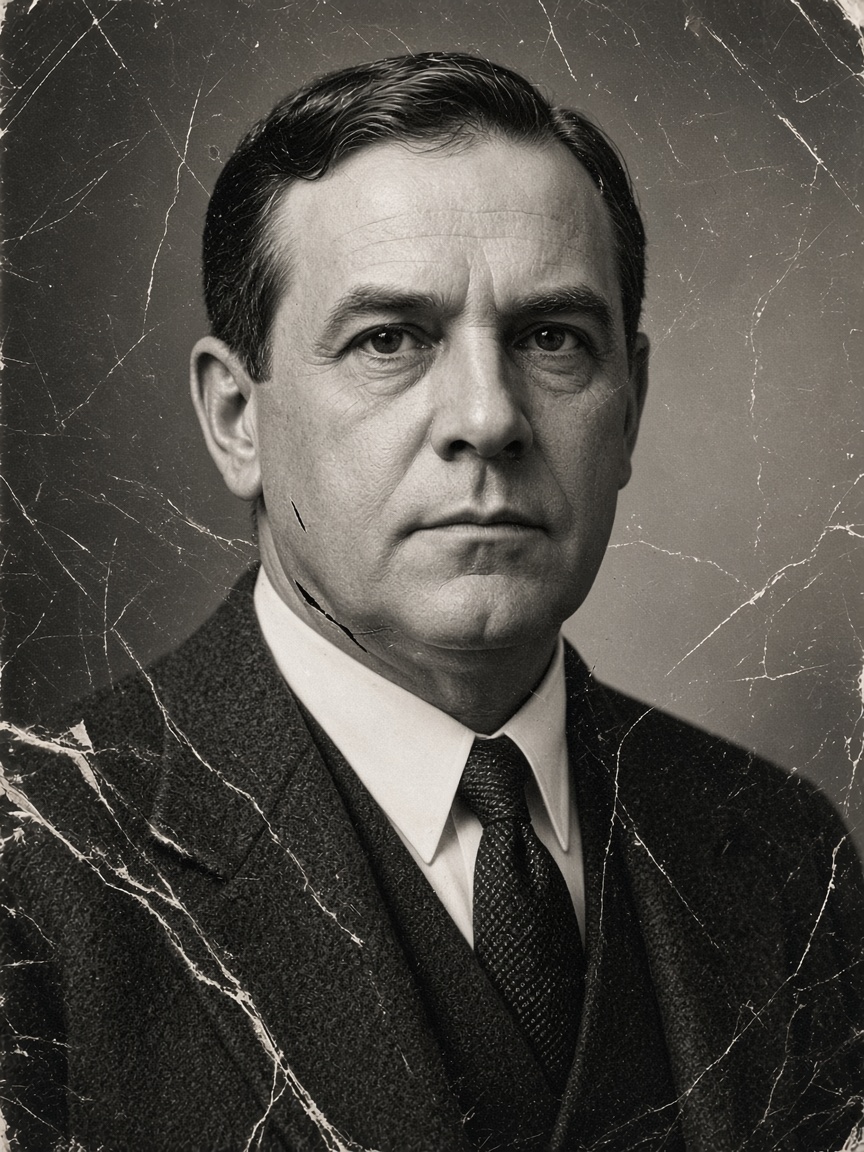
Scratches
Scratches appear as light or dark lines across the emulsion. They may be fine hairline marks, deeper gouges, or a network of surface abrasions from albums, envelopes, or handling.
Fine scratches that sit on top of an otherwise intact image are often good candidates for cleanup. A deep scratch across a face is more demanding, but surrounding skin tone and features can still provide enough information for a careful repair. If the scratch has removed the only record of an eye, a mouth, or another unique feature, the repair has to stop at what the photograph still shows.
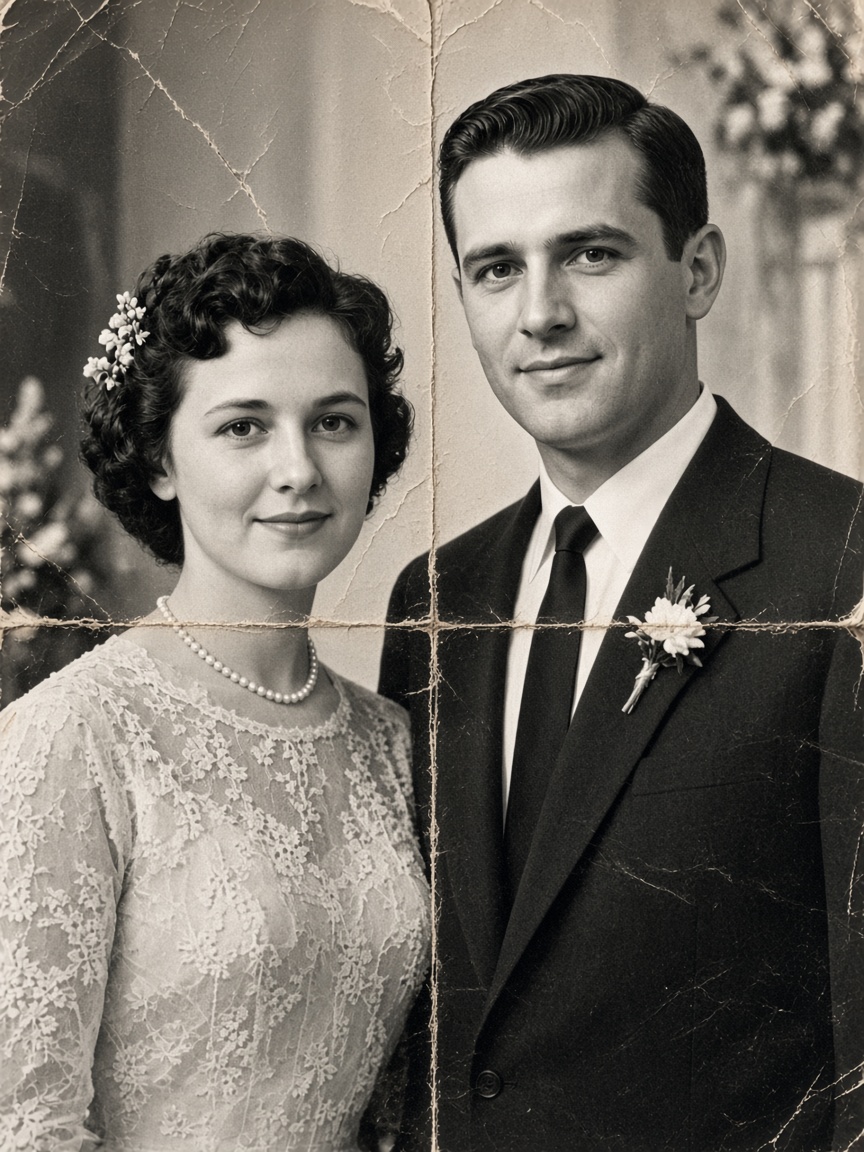
Creases
Photographs that have been folded, bent, or stored under pressure develop crease lines. Those lines can catch light, crack the emulsion, or leave a permanent pale or dark streak through the image.
Crease repair aims to reduce the interruption so the photograph can be read as a continuous picture. The fold itself is part of the print’s history; the digital file does not need to keep a distracting white line through someone’s face. Where the emulsion has cracked and a thin strip of image is lost, small reconstruction from either side of the crease may be possible.
Stains
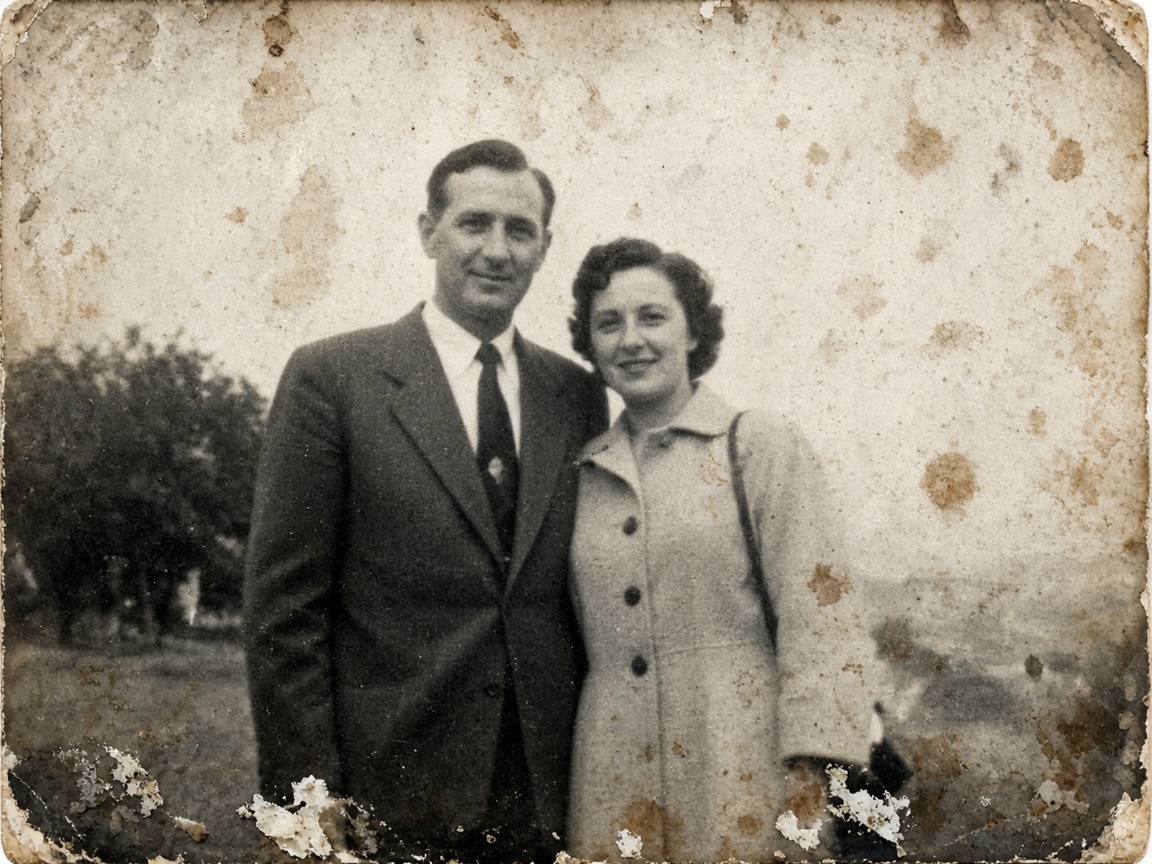
Stains and spots come from foxing, adhesives, ink, food, mold traces, tape residue, and unidentified marks that appear after decades in a box or album. Some sit clearly on top of the image. Others have discolored the photograph beneath.
Cleanup is most successful when the underlying photographic detail is still visible through or around the mark. A dark spot on a plain background is usually simpler than a stain that has altered a face. I reduce what I can without flattening the surrounding image into an empty patch.
Fading
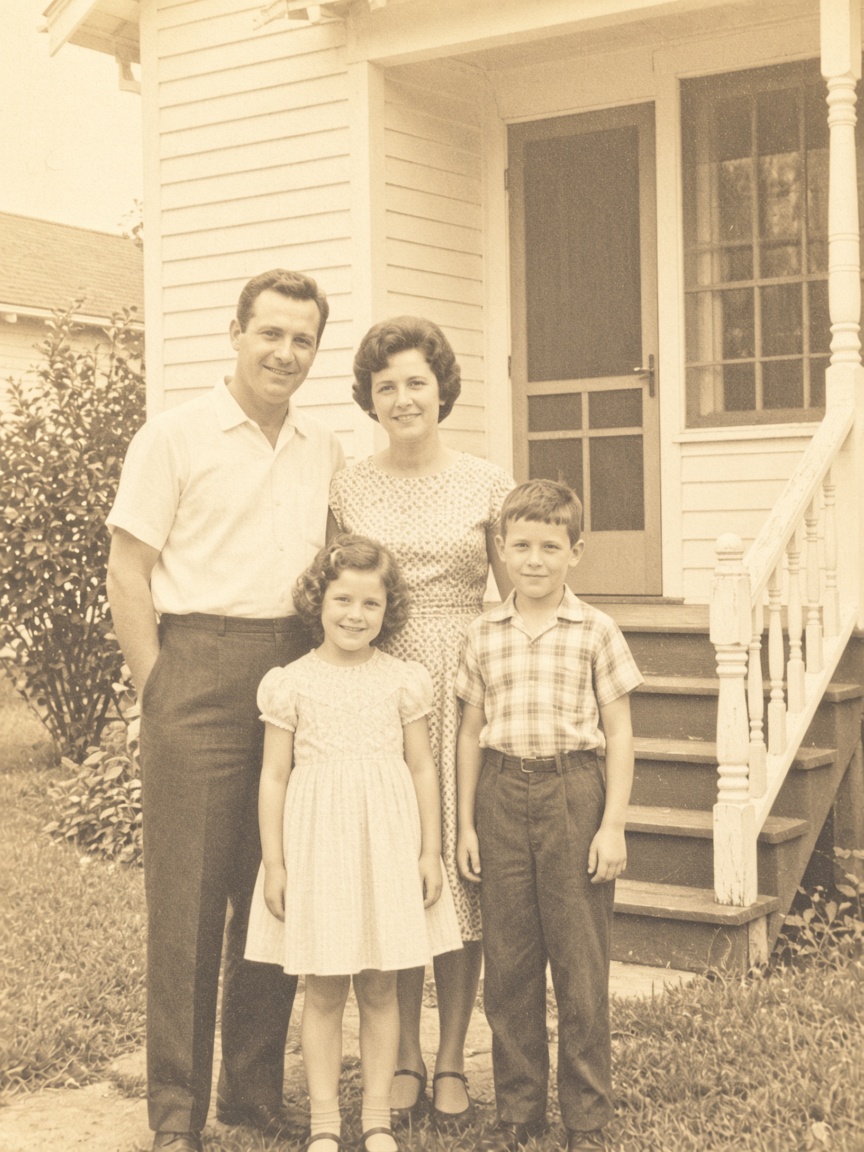
Faded photographs look washed out. Contrast drops. Dark areas turn gray. Faces lose modeling. In color prints, some dyes fade faster than others, leaving an uneven remaining image.
Many faded prints still contain more tonal information than they appear to hold at first glance, especially in a decent scan. Restoration can recover readability by working with that remaining information. It cannot restore density that is no longer there. A print that has gone almost blank in the highlights may only improve to a point.
Discoloration
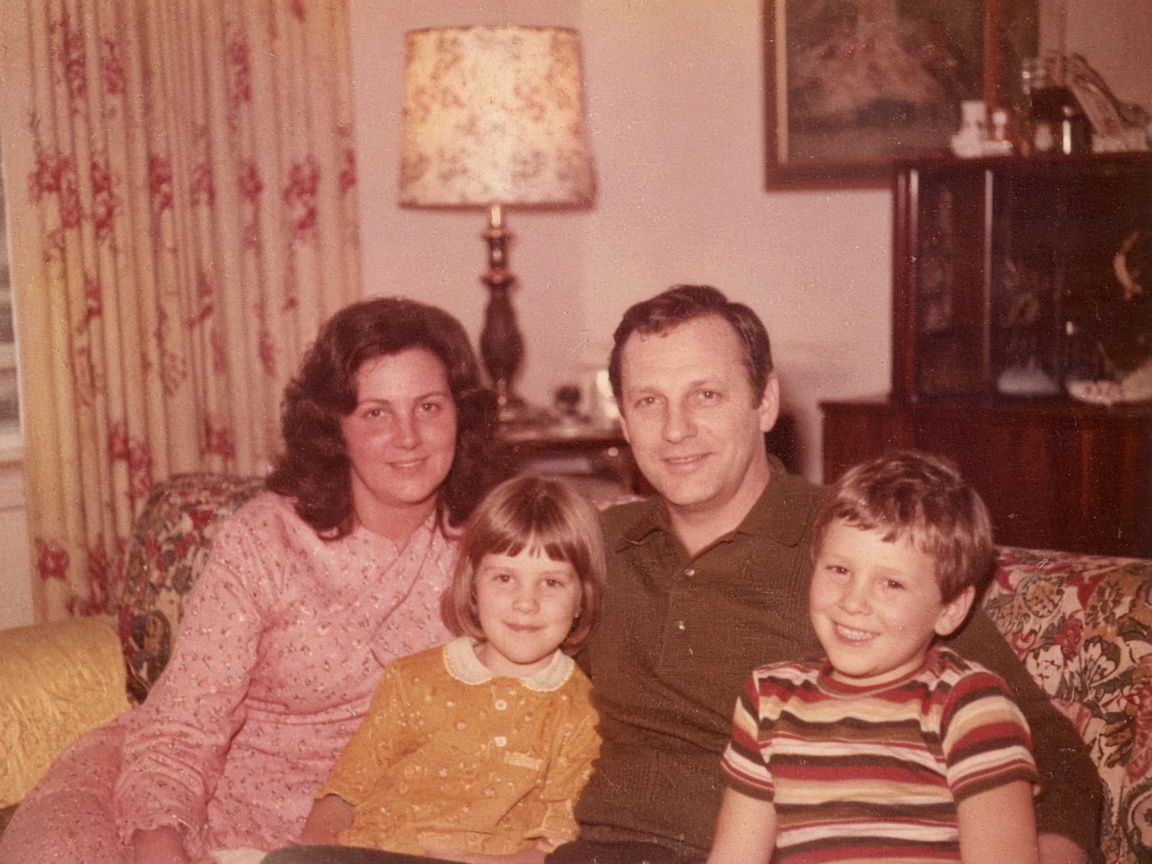
Discoloration is related to fading but not identical to it. Old color prints may shift toward yellow, magenta, or red. Black-and-white prints may yellow with the paper or take on a brown cast. Uneven storage can leave one side of a photograph a different color from the other.
Color correction aims to return a more plausible balance for that particular print, not to make it look like a photograph taken this year. I would rather leave a photograph slightly warm than push it into an artificial neutrality that the original never had.

Missing Corners
Missing corners are among the most common physical losses. Albums, tape, and brittle paper take corners first. Sometimes the loss is only the margin. Sometimes it cuts into the image.
A missing margin can often be rebuilt in a quiet, unobtrusive way. A missing corner that includes part of a hat, a shoulder, or a background pattern depends on whether the remaining image shows what continued into that corner. If it does not, I will not invent a specific object that the photograph no longer contains.
Missing Image Areas
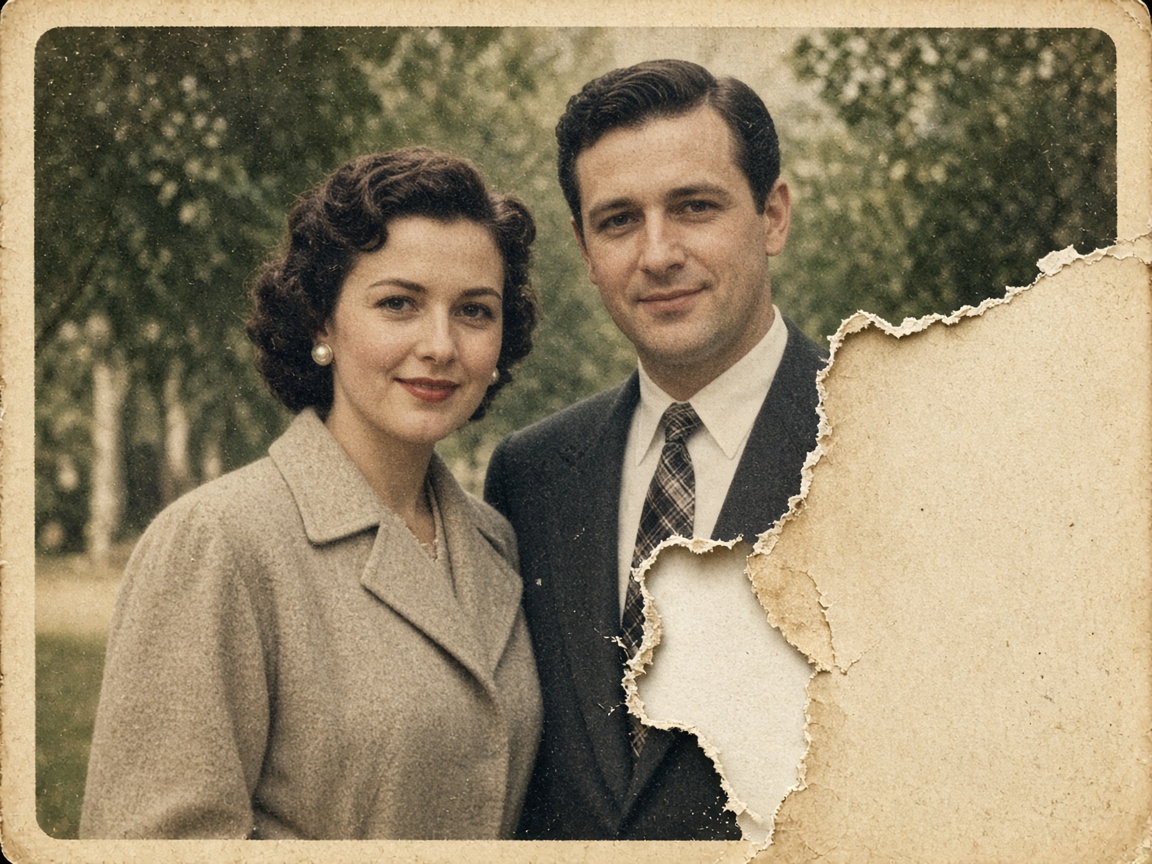
Holes, torn-away sections, insect damage, and losses from a stuck album page can remove part of the actual photograph. This is the hardest category to discuss honestly, because people often hope the missing piece can be brought back.
If the missing area is small and surrounded by continuous detail — grass, a coat, a studio backdrop — reconstruction may be reasonable. If the missing area is a face, a unique garment, handwriting, or any element that cannot be inferred, it cannot be accurately recovered. I will tell you which situation you are in before work begins.
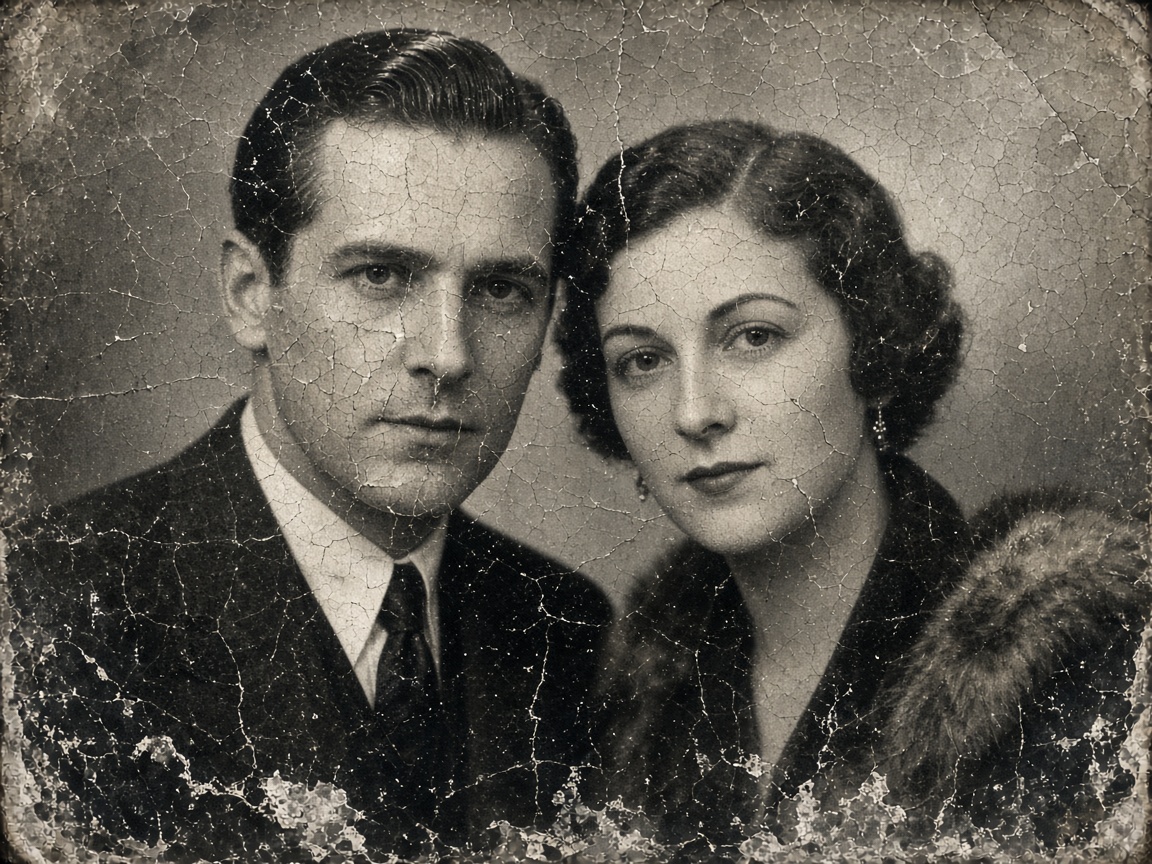
Surface Deterioration
Surface deterioration includes silvering, cracking, sticky or lifting emulsion, scuffs, and a general breakdown of the photographic surface. It can look like a dull sheen, a network of fine cracks, or a rough, worn face to the print.
Some of these effects photograph as texture that can be reduced. Others have already destroyed image detail. Silvering, for example, may obscure a dark background in the scan even though the print still holds an image underneath. Lighting and scanning method matter here. I work with what the file shows and will say if the surface loss is too complete.
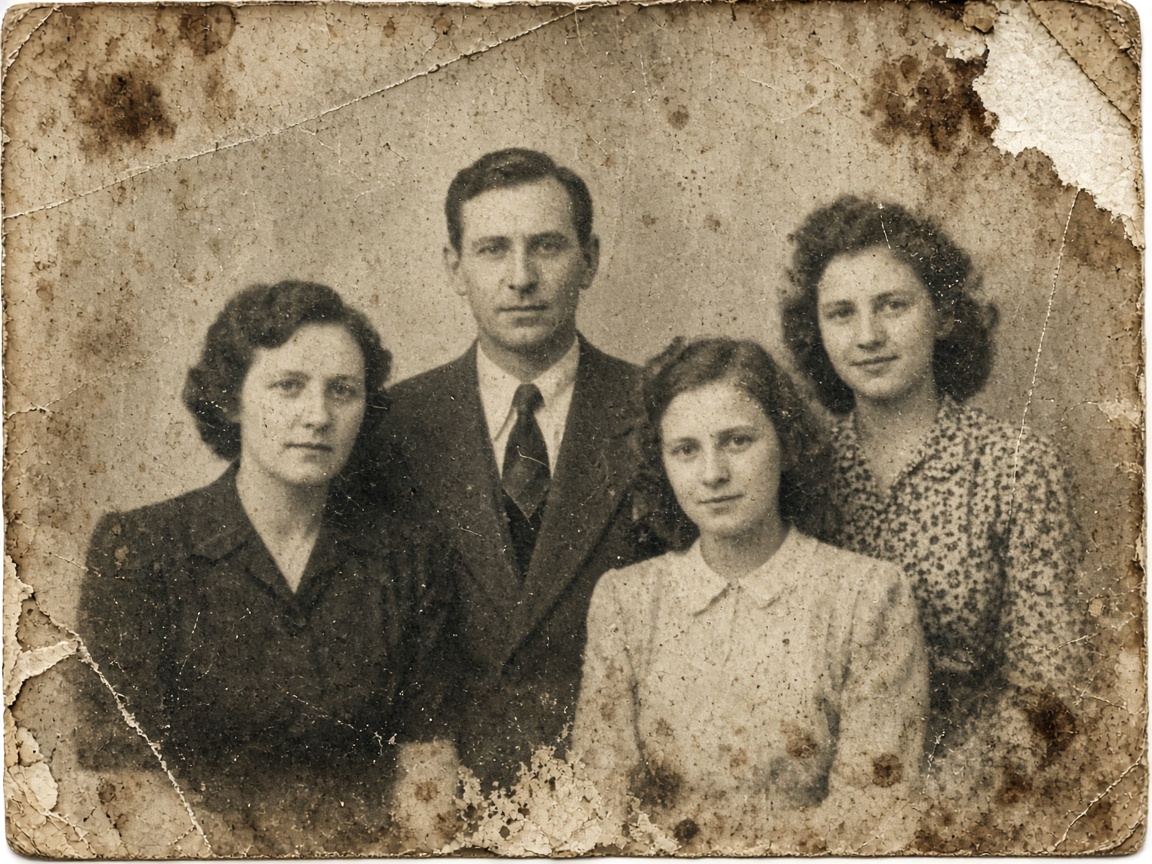
Multiple Forms of Damage
Most old photographs do not arrive with a single problem. A print may be faded, creased, stained at the edges, and torn in one corner. Restoration then becomes a matter of sequence and judgment: what to address, how far to go, and what to leave because it is part of the photograph rather than a distraction.
I look at the whole print, not only the most obvious defect. The goal is a coherent image that can be lived with, not a demonstration that every possible mark was removed.
Not sure how to describe the damage?
Send a photograph of the print. You do not need the correct term. I will look at what is actually there.